
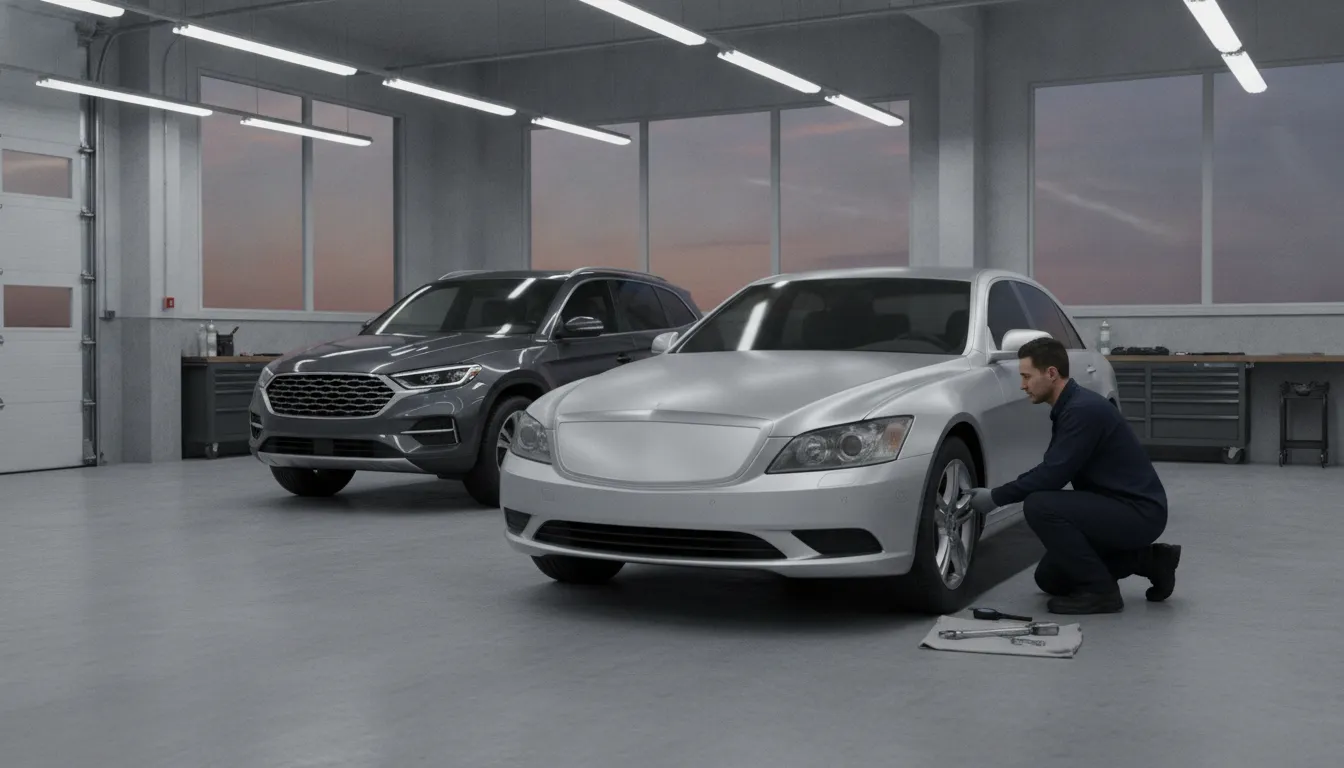
Maintenance is one of the clearest ownership differences to examine before buying a used luxury vehicle, especially when two similarly equipped cars use very different powertrains. The right comparison is not simply gas versus electric: a traditional hybrid, a plug-in hybrid, and a battery-electric vehicle each divide work between mechanical systems, electronics, and energy storage in a different way.
Schedule service and ask which maintenance items apply to the car you are comparing.
In hybrid vs electric car maintenance, traditional hybrids and plug-in hybrids still need engine oil, filters, and other gas-powertrain service because they have an internal-combustion engine. Battery-electric cars eliminate that engine maintenance, while regenerative braking can reduce brake wear; all three may still require tires, inspections, cooling-system attention, and manufacturer-specified checks.
That distinction matters for a used luxury shopper because service history, battery-system coverage, driving habits, and access to qualified technicians can shape the ownership experience as much as the badge on the hood. Looking more closely at what changes across these powertrains makes it easier to compare the maintenance responsibilities of the vehicle you are considering.
What changes in hybrid vs electric car maintenance?
The biggest difference is whether the vehicle still has a gasoline engine. A traditional hybrid, or HEV, combines an engine with an electric motor and battery. A plug-in hybrid, or PHEV, adds a larger battery that can be charged externally, but it still relies on an engine when needed. A battery-electric vehicle, or BEV, uses electric motors instead and has no gasoline engine.
- HEV: Keeps engine service such as the maintenance required by a conventional gasoline vehicle, along with its electric drive system.
- PHEV: Keeps gasoline-engine service while also using a rechargeable battery and electric drive system.
- BEV: Drops engine-related service because it has no gasoline engine, while retaining its electric drive system.
That distinction explains why hybrid maintenance generally looks familiar to drivers who have owned gasoline vehicles. The U.S. Department of Energy's Alternative Fuels Data Center notes that HEVs and PHEVs need maintenance similar to conventional vehicles because they have an engine. Their electrical systems usually need little scheduled maintenance, and regenerative braking can help brakes last longer by using the electric motor to slow the vehicle. The Department of Energy explains electric-vehicle maintenance differences.
All-electric cars remove several engine-related items from the maintenance picture. With fewer moving parts and fewer fluids, including no engine oil, they generally need less maintenance overall. That does not mean a BEV is maintenance-free. It still has systems that require inspection and care, and its brakes, tires, suspension, and other vehicle components remain part of normal ownership. The service schedule and the vehicle's design should guide what gets checked and when.
For owners comparing a hybrid with an electric luxury vehicle, the practical question is not whether one needs service, but which systems the service supports. Select Auto Imports is an Alexandria used luxury dealer whose service center works on both, including luxury and exotic vehicle service.
Which service items stay, and which drop?
A side-by-side list is more useful than a slogan about which car is easier. The pattern is simple. If the car still burns gasoline, the engine service stays. If it does not, those lines leave the schedule. Tires, brakes, filters, and software stay on every list.
The cells below are categories, not a schedule for your car. A Porsche plug-in hybrid and a Tesla do not share intervals. Read the maintenance section of that model's owner's manual, then match the records to it.
| Service item. | Hybrid. | Plug-in hybrid. | Electric car. |
|---|---|---|---|
| Engine oil and filter. | Still required. | Still required. | Not part of the powertrain. |
| Spark plugs and engine air filter. | Still required. | Still required. | Not part of the powertrain. |
| Fuel system. | Still required. | Still required. | Not part of the powertrain. |
| Brake inspections. | Reduced wear. Still inspect. | Reduced wear. Still inspect. | Reduced wear. Still inspect. |
| Tire rotation and alignment. | Still required. | Still required. | Still required. |
| Cabin filter. | Still required. | Still required. | Still required. |
| Battery or inverter coolant. | Check the manual. | Check the manual. | Check the manual. |
| High-voltage inspection. | Follow the manual. | Follow the manual. | Follow the manual. |
| 12-volt battery. | Still inspect. | Still inspect. | Still inspect. |
| Software updates. | Usually required. | Usually required. | Usually required. |
Oil, plugs, and the fuel system are the lines an electric car deletes. A traditional hybrid and a plug-in hybrid both keep them, because both still have an engine. A plug-in can run on electricity for many short trips, and that can stretch the time between some engine services. It does not delete them. Fuel that sits, and an engine that rarely reaches full temperature, are reasons to follow the time limit in the manual, not only the mileage.
Brakes are the item people most often get wrong. Regenerative braking slows the car with the motor, so the friction brakes work less. They still need inspection. On a luxury car that sits, corrosion on the rotors can matter more than worn pads. Tires are the other shared cost. A heavy electric luxury SUV can wear tires faster than a lighter hybrid sedan. Rotation and alignment stay on the list either way.
Coolant is model-specific. Some high-voltage batteries and inverters use liquid cooling, and the manual may call for a check or a fluid service. Others do not. Treat "check if the manual lists it" as the honest cell, not a promise that every electric car needs a coolant flush.
Use the table to see which stack you are taking on. Then open the manual for the car you are comparing. That is the only place the interval is real.
What upkeep do hybrids and electric cars still share?
Dropping the oil changes does not drop the rest of the car. Hybrid vs electric car maintenance still shares the work that keeps a luxury vehicle quiet, safe, and predictable. Those items are where a used buyer should look, because they show up on both window stickers.
Tires come first. Electric cars are heavy, and instant torque loads the tread. Many luxury hybrids are heavy too, especially plug-in SUVs with a large battery. Rotation and alignment still matter. A car that pulls, or a set of tires worn on the shoulders, is a maintenance fact you can see before you talk about the battery.
Brakes are next. Regenerative braking can extend pad life, which is helpful, and it can also hide a neglected system. If the friction brakes rarely work hard, the rotors can rust and the calipers can stick. An inspection is still an inspection. Ask whether the brakes were checked, not whether the pads "should" be fine because the car is electric.
The cabin filter, wipers, and suspension are ordinary and easy to skip. A clogged cabin filter makes the climate system work harder. Worn control-arm bushings and tired dampers show up as noise and a loose feel on the highway, which matters in a car you bought for that feel. None of this changes because the motor is electric.
Two electrical items sit beside the big battery. The 12-volt battery still runs locks, computers, and the contactors that wake the high-voltage system. It can leave you stranded even when the drive battery is healthy. Software updates can change range estimates, charging behavior, and driver aids. Ask whether the car is current, and whether updates require a shop visit or happen over the air.
Cooling is the item to confirm in the manual rather than assume. The U.S. Department of Energy notes that some battery systems use liquid coolant to stay in a safe temperature range, and that those systems may need regular checks. If the manual lists a coolant service, it belongs on your list for a hybrid, a plug-in hybrid, or an electric car. If it does not, do not add one.
None of this makes an electric car maintenance-free, and none of it makes a hybrid a burden. It means the shared list is where ownership actually feels the same. If you want a technician to walk through that list on a specific car, you can schedule service in Alexandria.
How should you think about the battery and high-voltage system?
The battery is not one part with one job. In hybrid vs electric car maintenance, the pack's size and role change what you are maintaining and what a warranty might cover.
A traditional hybrid uses a smaller battery that charges as you drive and brake. You do not plug it in. The pack assists the engine and restarts it. Service is mostly about warning lights, cooling, and the inspections the manual lists, not a charging habit.
A plug-in hybrid uses a larger pack that you can charge, plus the same gasoline engine. You maintain both. Short electric trips do not retire the engine schedule. They sit beside it.
An electric car uses the drive battery as its only propulsion source. There is no engine oil and no spark plugs. The pack, the motor, the inverter, and the charging hardware are the powertrain. Day-to-day care is charging habits and software, plus the coolant check if the manual lists one. That is a shorter list. It is not a list with nothing on it.
Warranty is where used shoppers get hurt by averages. The Department of Energy notes that many manufacturers offer 8-year or 100,000-mile warranties on electric-vehicle batteries. That is a common new-car pattern, not a promise about the car on the lot. Coverage can exclude degradation down to a stated capacity, and it may not transfer the way a buyer expects. Ask what warranty, if any, is still in force on that vehicle, what it excludes, and whether it transfers to you. Read the terms. Do not assume every used hybrid or electric car is covered.
Replacement cost is the other place to stay specific. The same Department of Energy page says manufacturers typically do not publish battery prices, and that a replacement outside warranty can be a significant expense. There is no honest single dollar figure for a luxury hybrid pack or an electric SUV pack. If a seller quotes one, ask what it includes and whether it applies to that model. Battery warranty and replacement context from the Department of Energy is background, not a quote for your car.
High-voltage systems in these vehicles commonly run from 400 to 1,000 volts. The pack is sealed, the cables are marked, and the system is built to shut down after a serious fault. That is not a home project. Do not open the pack, and do not probe orange cables. A qualified shop can scan the car and inspect cooling and connections. A buyer should not.
Select Certification is a separate question. On certified cars, Select Auto Imports performs a mechanical and structural inspection and gives a written guarantee against frame damage, body panel replacements, and flood damage. That guarantee is not a battery warranty, and not every car in inventory is certified. Flood history still matters, because water and high-voltage parts are a bad pair, which is one reason the structural check is worth reading. Browse current certified pre-owned inventory and confirm the paperwork on the exact car.
Which powertrain fits the maintenance you want?
Choose the service list you are willing to keep, then the car. Hybrid vs electric car maintenance is a lifestyle match, not a winner. A hybrid asks you to keep engine service and gives you a gas station as backup. An electric car deletes that engine service and asks you to live with charging. A plug-in hybrid asks for both, with a shorter electric range in return.
Use this order before you fall for a badge:
- Name the powertrain. Confirm whether the car is a traditional hybrid, a plug-in hybrid, or a battery-electric car. The badge and the window sticker can disagree with a casual description. "Hybrid" on a listing is not enough.
- Read that model's schedule. Ignore generic averages. The owner's manual lists oil, coolant, brake fluid, cabin filters, and inspections for that chassis. A plug-in luxury SUV can have more lines than a small traditional hybrid.
- Match the schedule to your driving. Short trips and reliable home charging favor an electric car's shorter list. No home charging, street parking, or frequent long highway trips can favor a hybrid, and you should budget for the engine service that comes with it. A plug-in hybrid fits drivers who can charge most nights and still want gasoline for trips.
- Ask someone who works on both. A technician who sees hybrids and electric cars can tell you whether the next services are realistic for that model, and whether the records support them. That conversation is more useful than a forum average.
Do not treat "less maintenance" as "no surprises." Electric cars still need tires, brakes, filters, and sometimes coolant. Hybrids can be inexpensive to run and still need an engine repair later in life. If you want the repair-cost side of hybrids, read whether hybrid repairs cost more. That article is about repair bills, not this service comparison.
Shopping is separate from the schedule. If you are comparing battery-electric luxury cars in this market, the current used Tesla inventory is one place to start. It is an example of what is on the ground, not a claim that one brand is the only electric car worth maintaining.
Bring the manual's service table, or a photo of it, when you look at the car. The right powertrain is the one whose remaining service you understand before you sign.
What should you check on a used luxury hybrid or EV?
The comparison only helps if the specific car matches it. A clean hybrid vs electric car maintenance chart cannot fix missing records. Look for evidence that the schedule was followed, and for signs it was not.
Start with the service file. On a traditional hybrid or a plug-in hybrid, look for oil changes at the intervals the manual sets, plus filters and any listed coolant or brake-fluid service. Gaps matter more than a perfect stamp collection. On a battery-electric car, missing oil changes are normal, because there is no engine oil. Missing tire, brake, and inspection records are not. Do not praise an electric car for "no service history" if the shared items were ignored.
Then look at the parts you can see. Tires should match across the axle and show even wear. Brakes should have been inspected even if the pads look thick. Ask about rotor rust if the car was parked for long stretches. If the manual lists a coolant service for the battery or inverter, ask for that record too. Warning lights, a charging fault, or a stored message about the hybrid system are reasons to pause, not footnotes.
Battery coverage is a document, not a vibe. Ask whether any manufacturer battery warranty transfers to the next owner, how many miles or years remain, and what it excludes. Degradation down to a set capacity is often the line that matters, and it is easy to over-read a brochure. An extended warranty, where one is offered, has its own terms. Nothing here means every car on the lot has coverage.
A history report is not a mechanical inspection. It will not show a tired 12-volt battery, a stuck caliper, or a coolant leak. Select Auto Imports works across luxury brands and can look at the car with you. That is not a promise that every visit includes high-voltage diagnostics. Ask what the inspection covers for that model.
If this car would replace one you already own, value your trade before you negotiate, so the maintenance question and the trade question stay separate. If you need a loan, review financing options. Terms, including loans up to 84 months where offered, depend on the applicant and the vehicle. There is no single rate, and approval is not guaranteed.
Walk in with the powertrain named, the manual's next service circled, and the warranty page in hand. That is the check that makes the comparison real.
Frequently asked questions
Do hybrid cars need less maintenance than electric cars?
Usually no. A hybrid still has a gasoline engine, so it keeps oil changes and other engine service. An electric car drops that work. Both still need tires, brake inspections, filters, and the checks listed in the owner's manual.
Does a plug-in hybrid have the same maintenance as a regular hybrid?
They share engine service, and the plug-in adds a larger battery you can charge. Follow the time limits in the manual if the engine is used less often. Do not assume short electric trips cancel oil changes.
Are electric cars maintenance-free?
No. They skip engine oil, spark plugs, and fuel-system service. They still need tire care, brake inspections, cabin filters, software updates, a 12-volt battery, and coolant service when the manual calls for it.
Do regenerative brakes mean I can skip brake service?
No. Regenerative braking can reduce pad wear, which is why inspections still matter. Rotors can rust and calipers can stick when the friction brakes are rarely used. Have them checked on the schedule for that car.
How long is an electric car battery warranty?
Many manufacturers offer 8 years or 100,000 miles on the battery for a new vehicle. A used car may have less coverage left, or none that transfers. Ask for the terms on that vehicle, and do not treat the new-car figure as yours.
Ask which schedule fits the car
Hybrid vs electric car maintenance comes down to the car in front of you. A hybrid still has engine service. An electric car drops that list and keeps tires, brakes, filters, coolant, and software. Bring the model and its records, and the service team can tell you which items actually apply.
Schedule service to review a used hybrid or electric car before you buy.