
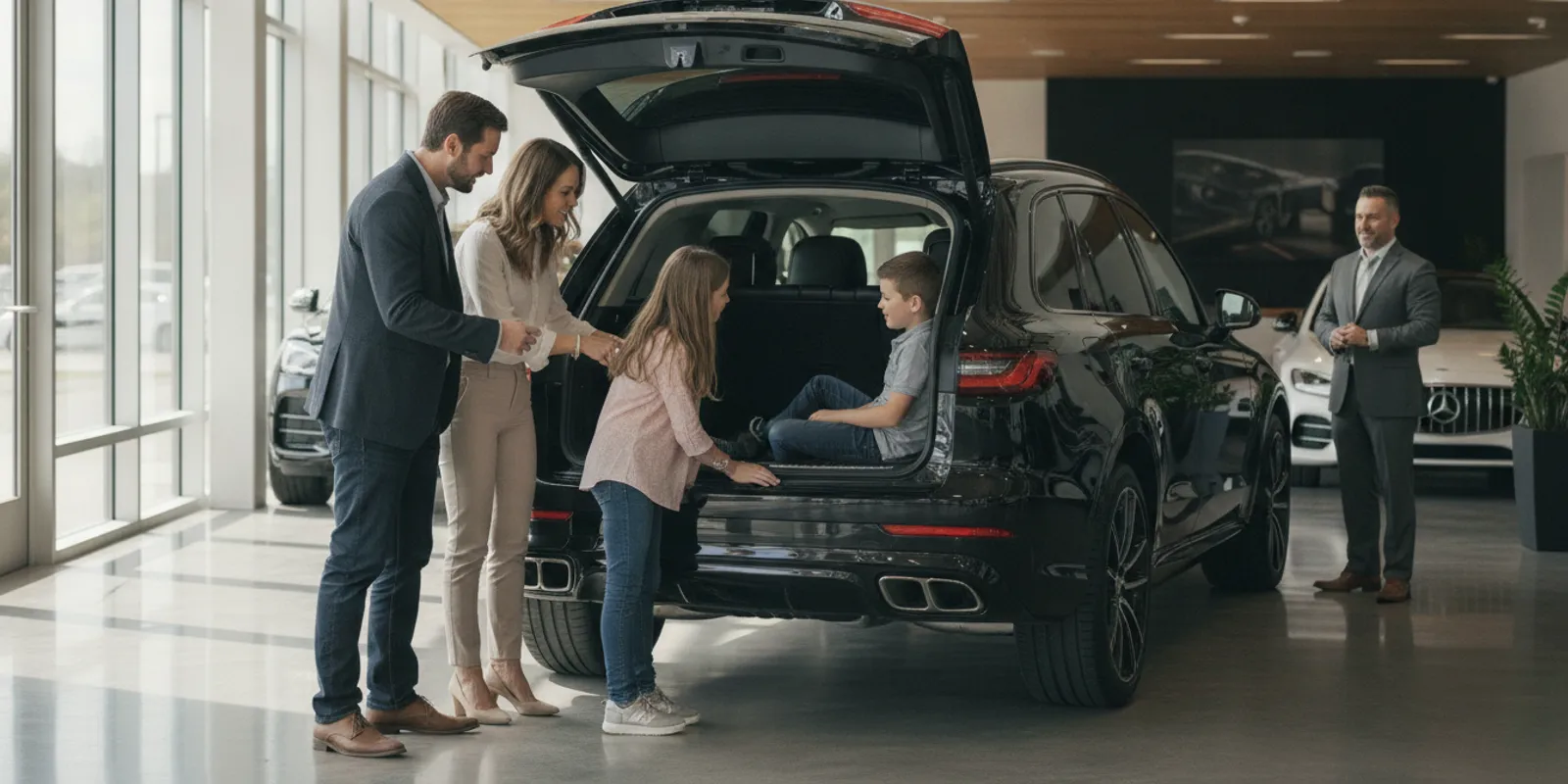
The best luxury SUV for families is the one that fits your everyday routine, not simply the one with the most features. Start by comparing usable seating and cargo space, child-seat access, driver-assistance features, comfort, and the condition of the specific vehicle. A thoughtful test drive with your family’s real needs in mind can narrow a long list to a confident choice.
What should a family look for in a luxury SUV?
Family needs vary. A household with one child and a compact stroller may value easy city parking, while a family with several children may need three usable rows and room for backpacks, sports gear, or luggage. Write down the jobs your SUV has to do before comparing badges or trim levels.
- Passenger space: Check the room where your family will actually sit. Try the second row with child seats installed, and make sure adults can reach buckles and adjust the seats.
- Cargo flexibility: Test the cargo area with the third row up and folded, if equipped. Bring a stroller, instrument case, or other bulky item you regularly carry.
- Daily access: Check door openings, step-in height, rear-door child locks, and whether loading a child seat feels manageable in a tight parking space.
- Comfort: Have every regular passenger sit in their usual place. Consider visibility, climate controls, road noise, and how the seats feel during a longer drive.
- Technology you will use: Try the infotainment controls, phone connection, navigation, and driver-assistance features. Confirm that the controls are easy to use without distracting the driver.
Features and dimensions differ by model year, trim, and equipment. Check the exact vehicle rather than assuming every version of a model has the same seating, safety equipment, or convenience features.
How many rows does your family need?
A two-row SUV can be a strong fit when five seats are enough and you want to keep the vehicle easier to maneuver and park. It may also leave more cargo room behind the second row than a three-row vehicle does with all seats in use. But cargo layouts vary, so try your own luggage or stroller in the exact vehicle.
A three-row SUV offers extra seating flexibility, but the third row is not automatically suitable for every passenger or every trip. Check legroom, access, headroom, and how much cargo space remains with that row occupied. If you will use child seats, see whether the second row still slides or folds in the way your family needs.
Do not choose a larger SUV just because it sounds more practical. If the extra seats are rarely used, parking, maneuverability, and day-to-day access may matter more. If you regularly carry more than five people, the added flexibility may be worth the trade-off.
Which safety features should you evaluate?
Make a list of the driver-assistance and safety features that matter to you, then verify them on the vehicle you are considering. Depending on the model and equipment, features may include automatic emergency braking, blind-spot monitoring, lane-departure alerts, or a rearview camera. Names and capabilities differ between manufacturers, so ask what each system does and test its settings while parked.
Review the vehicle’s history and check for open safety recalls using the National Highway Traffic Safety Administration’s vehicle safety resources. A recall check is one part of due diligence, not a substitute for inspecting the vehicle or understanding its condition. If you have a particular child-seat setup, bring it along and confirm fit and installation points in the SUV.
How should you compare pre-owned luxury SUVs?
Compare specific vehicles, not only model names. Two SUVs with the same name can differ in year, trim, mileage, options, service history, and condition. Use a simple checklist to keep the comparison grounded in your priorities:
- Set your must-haves. Decide how many seats you need, the cargo items you carry, and which comfort or safety features are essential.
- Compare the exact equipment. Confirm the model year and trim, then verify that the features you care about are present on that individual vehicle.
- Review condition and documentation. Ask what inspection or certification applies to the vehicle, what records are available, and whether any warranty coverage is offered. Terms depend on the vehicle and must be confirmed.
- Test the family routine. Load child seats and cargo, adjust the seats, and drive on roads similar to your normal commute when possible.
- Estimate ownership needs. Consider fuel or charging, insurance, routine maintenance, tires, and your expected driving. Costs vary by vehicle and use, so confirm estimates for the specific SUV.
At Select Auto Imports in Alexandria, Virginia, the Select Certification process includes dual physical and mechanical inspection, with written guarantees against frame damage, body panel replacements, and flood damage for vehicles to which the certification applies. Not every vehicle is certified, so verify the status and terms for the SUV you are considering. You can learn about Select Certification and ask how it applies to a specific vehicle.
What should you ask before choosing?
- Can all regular passengers sit comfortably in their usual places?
- Does the cargo area work with the seats arranged the way we use them?
- Are the safety and convenience features we want installed on this exact vehicle?
- What inspection, certification, service records, and warranty details are available?
- What are the vehicle’s current price and any applicable fees, taxes, licensing, and registration costs?
- Can we arrange a test drive and bring our child seats or typical cargo?
At Select Auto Imports, pricing follows a one-price policy focused on value and quality upfront, without haggling. Review the listing and confirm current vehicle details and applicable charges with the dealership before making a decision.
Contact the dealership about your family’s SUV needs
Frequently asked questions
Is a two-row or three-row luxury SUV better for a family?
Choose based on how many people you regularly carry and how much cargo you need at the same time. A two-row SUV may suit a smaller household, while a third row can add flexibility. Test the seating and cargo layout in the exact vehicle before deciding.
Should I prioritize a newer model year?
Not by itself. Compare condition, maintenance documentation, equipment, mileage, and the features you need. Verify the details for each vehicle because model-year updates and available equipment vary.
Does every pre-owned SUV come with certification or a warranty?
No. Certification and warranty availability depend on the specific vehicle and its terms. Ask for the applicable documents and confirm what is covered before purchase.
Can I compare different luxury brands in one visit?
Select Auto Imports is an independent, used-only luxury and exotic dealership with vehicles across multiple brands. Inventory changes, so check current listings and confirm which SUVs are available before traveling.
The right family SUV balances passenger comfort, practical space, features, condition, and ownership needs for your household. Take time to compare the exact vehicles and test how each one works in your everyday routine.